Treating Prameha: what the texts actually prescribe
The most common mistake after a diabetes diagnosis is not eating too much — it is eating too little. Part two: the classical treatment, from the purification sequence to the morning decoction.
The most common mistake made after a diabetes diagnosis is not eating too much.
It is eating too little.
Prameha is the classical name for what we now call diabetes — a disease of the bladder-seat, marked by abundant, cloudy urine. If you have not read it, part one covers what it is, its twenty forms, and how to find out where you stand.
The rule for food, which is better than any diet
The classical instruction for what a person with Prameha should eat is one of the most practical sentences in the whole literature. Food and drink should have the following characteristic:
- reduce excess urine and fat
- not add bulk to the body
- increase hunger and strength
That last clause is the one that gets dropped, and it is the one that matters most.
The modern version of the mistake is everywhere. Someone gets an HbA1c result, panics, stops eating rice entirely, skips meals, loses weight quickly — and arrives three months later dizzy, weak, sleeping badly, with muscle wasted rather than fat. The number may have moved. The person is worse.
If your food regime is leaving you weaker and without appetite, it is the wrong regime — whatever the weighing scale says.
Prameha Chikitsa Sutra – Line of treatment:
Patients suffering from Prameha can be classified into 2 categories
Sthula Pramehi– Those who are obese and strong. They are given Shodhana (cleansing, purification treatment).
Krusha Pramehi – Those that is emaciated and weak. They are given nourishing treatment – Brumhana therapy
That is the whole triage. Everything else follows from which side of it you fall on.
What shodhana actually involves
This is a sequence, not a menu, and each step exists to make the next one safe.
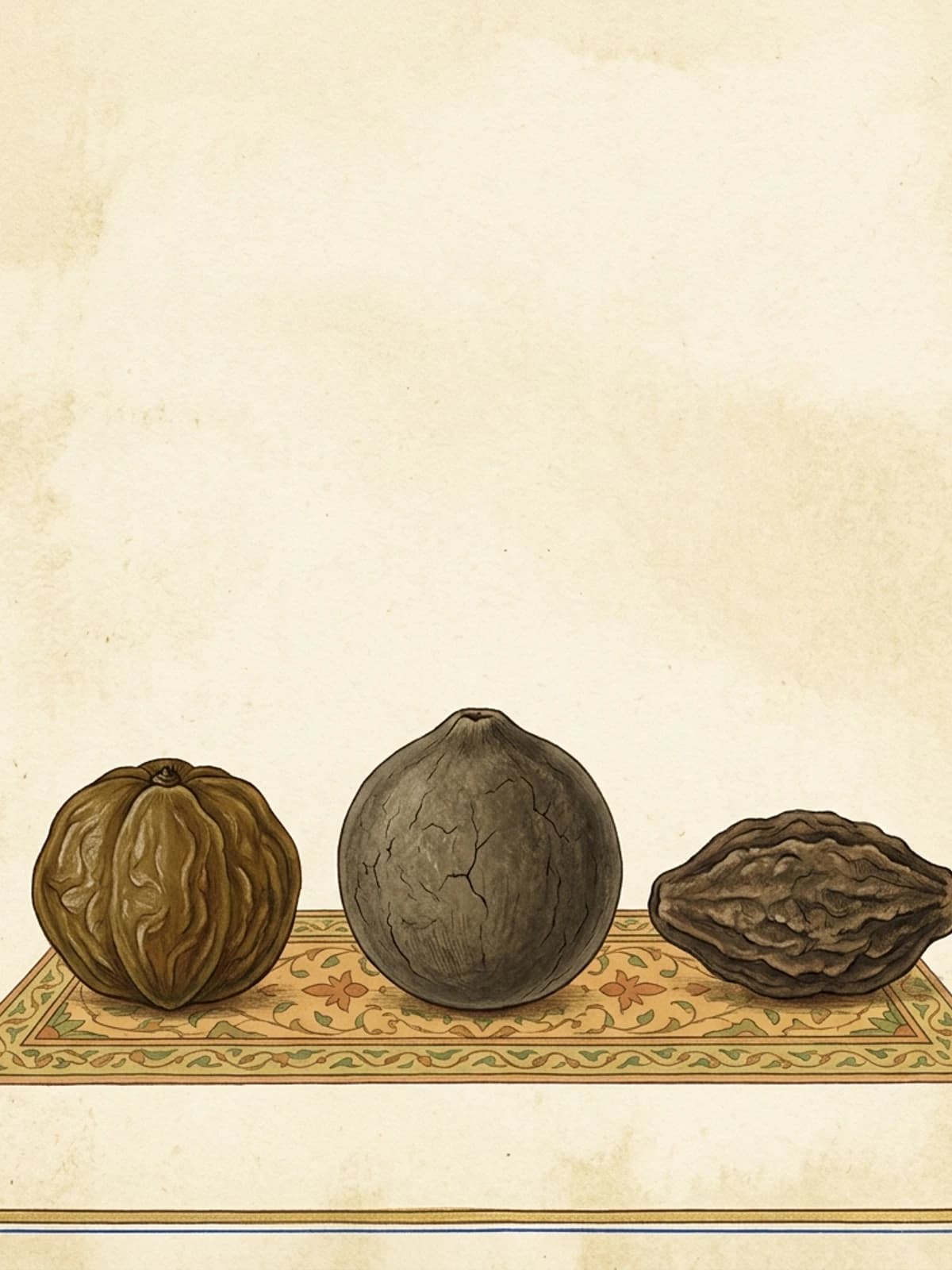
First, snehana — oleation. The body is oiled internally before anything is removed from it. The chapter names the oils to prepare it from, chosen to match the doṣha driving the case: vibhītaka, sarṣapa (mustard), iṅgudī, karañja, nimba (neem), nikumbha or trikaṇṭaka (gokshura). Alternatively, ghee cooked with the decoction of the priyaṅgvādi gaṇa — the priyangu group of drugs.
Then vamana and virechana — therapeutic emesis and purgation, using the recipes laid down in the Kalpasthāna.
Then a pause. The text is explicit that what follows waits until he regains his strength. That gap is part of the treatment, not a delay in it.
Then asthāpana basti — decoction enema — made from the surasādi gaṇa (the tulsi group), with a paste of mustā, amaradāru (devadaru) and nāgara (dry ginger) added. Where pitta is the dominant doṣa, the nyagrodhādi gaṇa — the banyan group — is used instead.
That last substitution is the detail worth noticing. The same procedure, at the same point in the sequence, is built from a different group of plants depending on which doṣa is driving your case. This is not one protocol with variations. It is a protocol that is assembled around the patient.
And it is clinical work, without exception. Vamana, virechana and basti are prescribed, prepared, measured and timed by a Vaidya, with days of preparation before and days of rebuilding after. Nothing in this article is an instruction to attempt any of it. If a practitioner has not assessed your strength, the answer is not shodhana.
Choosing shamana instead is not the lesser path. The texts direct it specifically at those who cannot afford to be depleted further — and if you are already tired, already losing weight, or already elderly, that is you.
What the texts actually prescribe
The recurring instruction across every variety of Prameha is a kaṣāya — a decoction — taken with honey.
The morning one, for every type
Before any of the type-specific formulas, the chapter gives a single daily measure that applies to all twenty varieties:
Juice of āmalakī (amla, आँवला), mixed with the powder of haridrā (haldi, turmeric), and honey — taken in the morning.
Three ingredients, every morning, whichever Prameha you have. If you remember nothing else from this article, remember that line.
And, in its place, any of these
The text then offers alternatives — not a stack to take together, but a list to choose from, which is how classical formularies are written. Any one of the following:
- Lick the paste or powder of the flowers of śāla, saptaparṇa, kuṭaja, kapittha, kampillaka, vibhītaka or rohītaka, with honey
- Or the powder of harītakī, taken the same way
- Or a decoction of triphalā, mustā, devadāru and haridrā, with honey
- Or a decoction of asana, citraka, triphalā, dārvī (daruharidra) and kāliṅgaka (kutaja seed), mixed with honey
- Or the fresh juice of guḍūcī (giloy) — or of āmalakī again
Note how often amla, haldi, triphala, daruharidra and giloy come round. Five plants carry most of this chapter.
Then, by type
Beyond the daily measure, there are four-herb decoctions specific to which doṣa is driving the case. A few from the kaphaja group:
- Harītakī, katphala, mustā and lodhra
- Haridrā, dāruharidrā, tagara and viḍaṅga
- Pāṭhā, mūrvā and śvadaṃṣṭrā (gokshura)
And from the pittaja group:
- Uśīra, lodhra, arjuna and lāla-candana
- Paṭola, nimba (neem), āmalakī and amṛtā (giloy)
- Nimba, arjuna, amṛtā, niśā and utpala
Arjuna, gokshura and neem now join the earlier five. Seven plants, in different combinations, carry the entire treatment chapter.
Three honest notes before anyone reaches for a jar.
On honey. Honey appears here as anupana — the vehicle a decoction is carried in, in small quantity, chosen for its scraping action on kapha. It is not being recommended as a sweetener, and it is not sugar-free. If you are monitoring blood glucose, raise it with your Vaidya rather than assuming it is harmless because it is traditional.
On dose. A decoction is not a pinch of powder in hot water. Proportions, quantity of water, duration of boiling and time of day all belong to the preparation, and they differ by person. The lists above tell you what the tradition uses. They do not tell you your dose.
On your existing medication. Nothing here replaces metformin, insulin, or any prescription you are on. Herbs that genuinely lower blood sugar can stack with medication that does the same, and the result is a hypoglycaemic episode. Any addition gets discussed with the doctor managing your numbers.
The part that is genuinely yours
Away from the pharmacy, the classical management of Prameha is mostly about three things you already control.
Barley. Yava is the grain of this chapter — it appears again and again, soaked in these decoctions, made into flour, made into gruel. In a modern kitchen: jau ki roti, jau ka dalia, barley in place of some of the rice. Bitter and astringent tastes are the ones that reduce kleda — karela, methi, neem, jamun, haldi.
Movement. Vyāyāma is prescribed for Prameha more insistently than for almost any other condition, because it is the most direct way to burn the accumulated medas. The classical measure still applies — balārdha, half your capacity, stopping when the breath moves to the mouth and sweat appears at the forehead. Half strength, daily, beats heroic effort twice a month.
Sleep, and daytime sleep. Divāsvapna — sleeping in the daytime — is specifically restricted here, because it increases exactly the kapha and kleda the whole treatment is trying to reduce. Night sleep, on the other hand, is not optional; it is one of the three pillars.
What to take away
The tradition offers a great deal here — but it offers it through a practitioner who has examined you, in a dose meant for you, alongside the medicine you are already taking. Not instead of it.
And underneath all of it, one rule that has not aged:
Reduce what is excess. Increase what is strength. Never confuse the two.
Part one of two → Prameha: the older name for diabetes
This article is for educational purpose, not a prescription. It does not replace your doctor, your Vaidya, or your medication. If you have diabetes, keep testing, and take any change — herbal or dietary — to whoever manages your treatment.
Educational content, not medical advice. Ayurveda is complementary to medical care, never a replacement for it. Talk to a Vaidya or your doctor before changing anything you take.
Five minutes. No card.