Tired of that Tingling Pain in one Leg? It might be Gridhrasi!
That sharp, electric pain running down one leg could be more than muscle fatigue. What sciatica is, what Gridhrasi is, and why the two are so often spoken of together.
Are you tired of that sharp, tingling pain shooting down one of your legs? It could be more than just muscle fatigue. Here's what both Ayurveda and modern medicine say about it.
What is Sciatica?
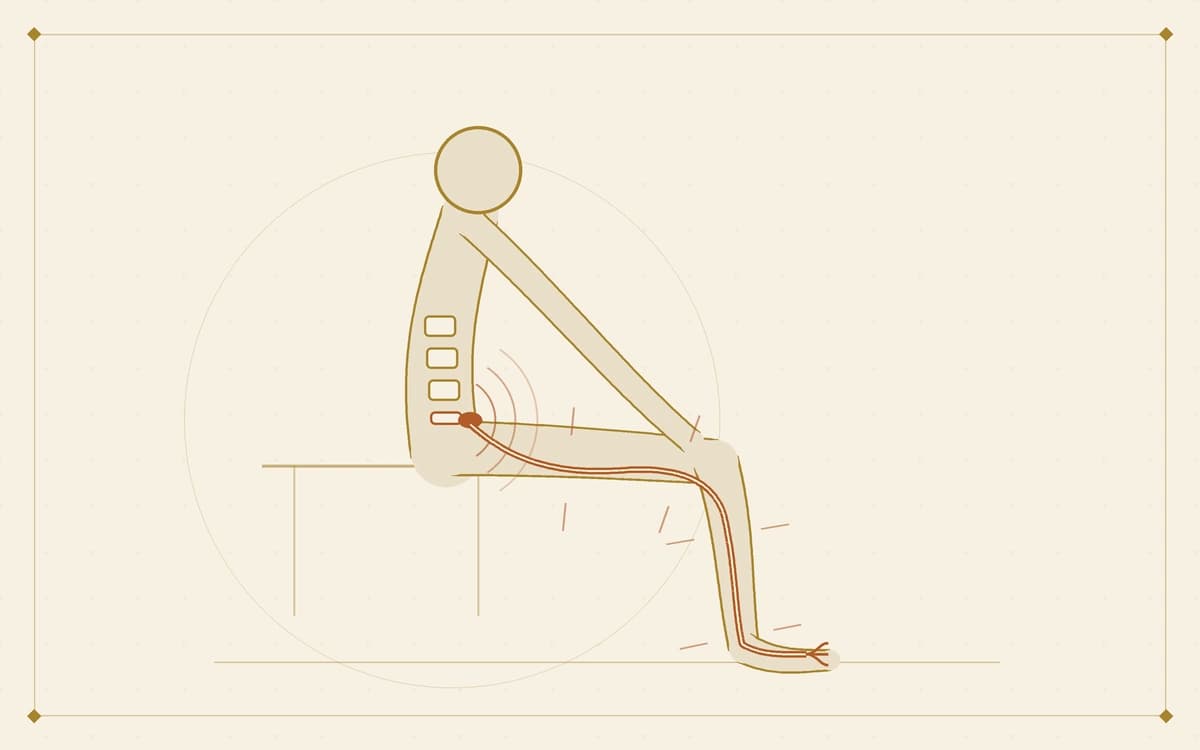
Before we understand sciatica, let's meet the main character, the sciatic nerve. Think of it as a long cable that starts in your lower back and travels all the way down one leg to your foot. Its job is to carry messages between your brain and your leg so you can move and feel normally.
Now imagine someone stepping on a garden hose. Water can't flow properly, right? Similarly, if the sciatic nerve gets squeezed because of a slipped disc, an injury, or another problem in the spine, it becomes irritated. Instead of carrying messages smoothly, it starts sending pain signals. That's when you may feel a sharp, electric-like pain, tingling, numbness, or even weakness running down one leg. This condition is called sciatica.
What is Gridhrasi?
In simple words, Gridhrasi is Ayurveda's way of describing a condition that is very similar to sciatica. The symptoms are so alike that they're often compared with each other.
But instead of talking about nerves and discs, Ayurveda talks about doshas. According to Ayurveda, when Vata dosha goes out of balance in the lower part of the body.
What is Vata Dosha? Vata dosha is responsible for movement in the body. It helps you walk, move your muscles, breathe, and even allows messages to travel through your nervous system. Imbalance of this dosha can cause a sharp pain that travels down one leg. You may also feel tingling, stiffness, or find it difficult to walk.
Sometimes, Kapha dosha joins in too. Kapha is responsible for giving the body stability, strength, and lubrication. But when it becomes imbalanced, it can make the affected leg feel heavy, sluggish, or stiff, making it even more uncomfortable. Think of it like Vata getting a partner in crime! When this happens, the leg may also feel heavy or sluggish, making it even more uncomfortable.
Correlation of Gridhrasi and Sciatica
Now you're probably wondering, "If they're different, why do people compare them?"
That's because they make you feel almost the same. In both the conditions, the pain usually starts in the lower back and travels down one leg. You may also feel tingling, stiffness, or find it difficult to walk.
The next question that comes in mind might be,
So are these the same thing?
Not quite either. The difference lies in how they explain the condition. Modern medicine says it's because the sciatic nerve is irritated or compressed, while Ayurveda says it's because Vata dosha has become imbalanced. Different explanations, but very similar symptoms — that's why Gridhrasi is often correlated with sciatica.
How can it be Managed?
The good news is that yes, it can be managed! But remember, there isn't one treatment that works for everyone. The right treatment depends on what is causing the pain and how severe it is.
Modern Medicine's Approach
If the pain isn't too severe, doctors usually start with simple treatments. They may ask you to rest (but not stay in bed all day!), avoid activities that make the pain worse (that you might already be doing), and make a few lifestyle changes.
They may also recommend physiotherapy, where a trained therapist teaches you special stretches and exercises. Think of it as giving your body a gentle workout so the muscles become stronger and the pressure on the sciatic nerve reduces.
If the pain is very severe or doesn't get better, doctors may suggest steroid injections to reduce inflammation around the nerve. In rare cases, if the nerve is badly compressed and other treatments don't help, surgery may be needed.
Ayurveda's Approach
Ayurveda focuses on bringing the aggravated Vata dosha back into balance while reducing pain and improving movement.
An Ayurvedic physician may recommend:
- Snehana (oil massage): Warm medicated oils are gently massaged over the body to relax the muscles and calm the aggravated Vata.
- Swedana (herbal fomentation): After the massage, gentle heat or steam is used to reduce stiffness and make movement easier.
- Basti: This is one of the most important treatments for Vata disorders in Ayurveda. It involves administering medicated oils or herbal decoctions through the rectal route under the supervision of a qualified Ayurvedic physician.
- Kati Basti: In this therapy, warm medicated oil is retained over the lower back for a specific period to help relieve pain and stiffness.
- Agnikarma: In selected cases, controlled therapeutic heat may be used to help reduce pain.
Since every person is different, an Ayurvedic physician decides the most suitable treatment after carefully examining the patient.
Conclusion
Whether you call it Sciatica or Gridhrasi, living with this kind of pain can make even simple daily activities feel difficult. The good news is that both modern medicine and Ayurveda offer ways to manage the condition. The key is to seek timely medical advice instead of ignoring the symptoms. Early diagnosis and the right treatment can go a long way in improving your quality of life.
There's no single "best" way to manage Gridhrasi or sciatica. Some people benefit from modern medicine, while others find relief with Ayurveda. In many cases, an integrative approach under the guidance of qualified healthcare professionals may help combine the strengths of both.
References
- Paul S Issack, David L Helfet — Sciatic Nerve Injury Associated with Acetabular Fractures — National Library of Medicine
- Minakshee C, Umesh T, Kamini S — A case study on Gridhrasi w.s.r. to Sciatica — Journal of Ayurveda and Integral Medical Sciences
- Charaka Samhita — Chikitsa Sthana — Vatavyadhi Adhyaya
- Davidson's Principles and Practice of Medicine — Disorders of the spine and spinal cord — Lumbar Spondylosis
Educational content, not medical advice. Ayurveda is complementary to medical care, never a replacement for it. Talk to a Vaidya or your doctor before changing anything you take.
Five minutes. No card.