The Wisdom of Ritucharya: Mastering Your Digestive Fire Through the Seasons
Ever noticed how seasons influence your cravings and digestive fire?
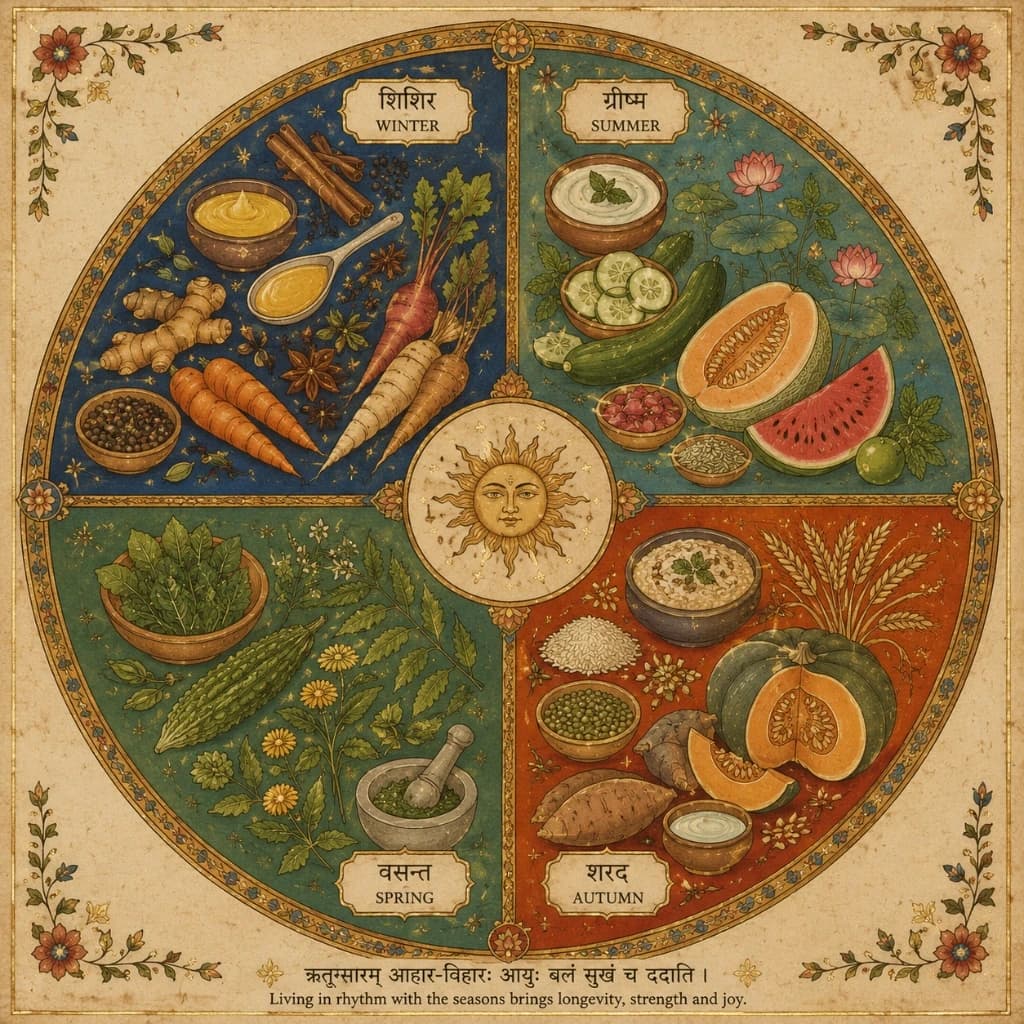
Have you ever noticed how your cravings subtly shift as the first crisp breeze of autumn arrives, or how your appetite wanes during the sweltering heat of summer? In Ayurveda, this intuitive biological rhythm is governed by Ritucharya, the ancient science of seasonal living. Unlike modern diets that promote static eating habits year-round, Ritucharya recognizes that human beings are microcosms of the universe. As the external environment transforms, so does our internal landscape, particularly our Bala (physical strength and immunity) and our Jatharagni (digestive fire). By understanding how to adapt our diet to these shifting seasonal tides, we can unlock a profound state of dynamic balance and vibrant health.
The Ebb and Flow of Bala and Jatharagni
At the core of Ritucharya lies a profound understanding of Jatharagni and Bala. Jatharagni is the metabolic engine of your body, responsible for breaking down food and assimilating nutrients. Bala represents your overall vitality and immunological resilience. Ayurveda teaches that these two vital forces are not constant; they naturally ebb and flow in direct response to the sun's trajectory and the changing environment.
During the colder months, the body naturally constricts to preserve heat, driving Jatharagni deep into the core. This results in a roaring digestive fire capable of handling heavy, nourishing foods, alongside a natural peak in our physical strength (Bala). Conversely, during the scorching summer months, the body dissipates heat outward, leaving the core depleted. Consequently, both our digestive capacity and our overall stamina reach their lowest point, demanding a much lighter, cooling diet.
Visarga Kala: Navigating the Seasons of Nourishment
The Ayurvedic year is divided into two major periods. The first, Visarga Kala (the Southern Solstice), encompasses the Monsoon (Varsha), Autumn (Sharad), and Early Winter (Hemanta). During this time, the moon's cooling energy is predominant, and the earth regains its moisture. As the weather cools, our Jatharagni begins to ignite, and our Bala steadily increases.
Dietarily, this is the time for rejuvenation. In Hemanta (Early Winter), when the digestive fire is strongest, one should indulge in sweet, sour, and salty tastes. Heavy, unctuous foods like root vegetables, ghee, and hearty grains are easily metabolized and serve to build tissue and immunity. However, during the transition of Varsha (Monsoon), Agni is still highly erratic due to sudden environmental shifts. Ayurveda recommends light, freshly cooked, and easily digestible meals during the rains, seasoned with ginger and black pepper to gently stoke the digestive embers without overwhelming them.
Adana Kala: Modifying Diet for the Seasons of Depletion
Adana Kala (the Northern Solstice) includes Late Winter (Shishira), Spring (Vasanta), and Summer (Grishma). During these months, the sun's piercing rays absorb the earth's moisture, gradually sapping our strength. Our Bala slowly diminishes, and our Jatharagni becomes increasingly sluggish as the heat draws blood and energy away from the digestive tract toward the skin.
To adapt, our diet must progressively lighten. In Vasanta (Spring), as the winter snow melts, so does the accumulated Kapha dosha in our bodies, often dampening our digestive fire. Astringent, bitter, and pungent foods like leafy greens, legumes, and light broths help clear this stagnation. By the time Grishma (Summer) arrives, our Agni is at its weakest. The diet must pivot to naturally sweet, cooling, and liquid-rich foods. Think juicy melons, cucumber, coconut water, and light rice dishes, avoiding spicy or heavy foods that would either extinguish the fragile digestive fire or overheat the system.
Conclusion
Embracing Ritucharya is an invitation to step out of the rigidity of modern fad diets and return to the fluid, intuitive wisdom of nature. By paying close attention to the seasonal shifts in our Bala and Jatharagni, we can seamlessly tailor our nutrition to meet our body's exact needs at any given moment. This ancient Ayurvedic practice does more than just prevent seasonal illness; it empowers us to live in perfect harmony with the Earth, ensuring sustained vitality, profound wellness, and a vibrant spirit all year round.
Educational content, not medical advice. Ayurveda is complementary to medical care, never a replacement for it. Talk to a Vaidya or your doctor before changing anything you take.
Five minutes. No card.