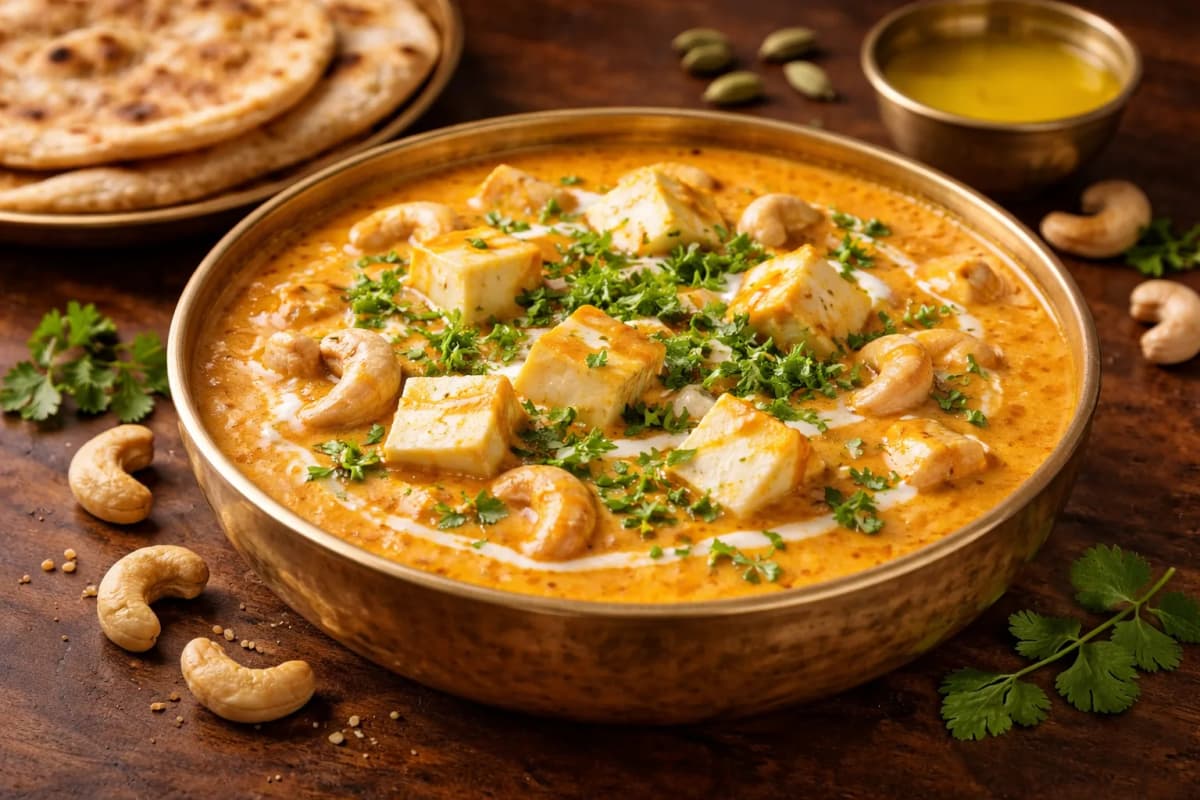
Paneer in Creamy Tomato-Cashew Sauce
Protein + fat combination deeply nourishes tissues
Prep
15 min
Cook
25 min
Serves
4
Best
Lunch (main meal)
Dravya · What goes in
- Paneer250g
Cubed — fresh, not frozen
- Tomatoes3 medium
Blanched and pureed
- Cashews15–20
Soaked 1 hour, blended to paste
- Ghee2 tbsp
- Cumin seeds1 tsp
- Fresh ginger-garlic paste1 tbsp
- Turmeric1/2 tsp
- Coriander powder1 tsp
- Garam masala1/2 tsp
Added at end
- Fresh cream2 tbsp
- Kasuri methi1 tsp
Dried fenugreek leaves — crushed
- Rock saltTo taste
- Fresh corianderFor garnish
Vidhi · Method
Soak cashews in warm water for 1 hour, then blend to a smooth paste with a little water.
Heat 1 tbsp ghee in a pan. Lightly pan-fry paneer cubes until golden on edges. Set aside.
In the same pan, heat remaining ghee. Add cumin seeds and let them crackle.
Add ginger-garlic paste, sauté for 1 minute until raw smell disappears.
Add tomato puree, turmeric, and coriander powder. Cook on medium heat for 8–10 minutes until oil separates.
Stir in cashew paste. Cook for 5 minutes, adding water to reach desired gravy consistency.
Add pan-fried paneer, rock salt, and cream. Simmer gently for 3–4 minutes.
Crush kasuri methi and sprinkle in along with garam masala. Stir once.
Garnish with fresh coriander. Serve warm with basmati rice or fresh rotis.
Why it works
Paneer (fresh cottage cheese) provides easily assimilable protein and fat — both critical for Vāta nourishment. Unlike aged cheeses which are Abhiṣyandī (channel-blocking), fresh paneer is considered Laghu (light) and Snigdha (unctuous). Cashews are Bṛṃhaṇa (nourishing), building Māṃsa (muscle) and Meda (fat) dhātus. The ghee-based preparation ensures deep tissue penetration. The warmth and creaminess directly oppose Vāta's cold, dry, rough qualities.
Effect · Vāta ↓↓ | Pitta → | Kapha ↑
Season · Hemanta, Śiśira (Winter)