Gut Microbiota and Autoimmune diseases- An Ayurveda Perspective
Modern immunology and classical Ayurveda arrived at the same crime scene from two different roads. One calls the culprit "dysbiosis." The other calls it "Ama." This is what happens when you put both case files on the same table.
When Agni Falters, the Gut Remembers First
Modern immunology and classical Ayurveda arrived at the same crime scene from two different roads. One calls the culprit "dysbiosis." The other calls it "Ama." This is what happens when you put both case files on the same table.
Somewhere in your gut right now, roughly two kilograms of bacteria are quietly deciding how your immune system behaves — not just today, but for years to come. When that community falls out of balance, the consequences rarely stay in the gut. Rheumatoid arthritis, type 1 diabetes, multiple sclerosis, lupus, inflammatory bowel disease — conditions that look like they belong to entirely different organs — keep tracing back to the same starting point: a gut barrier that let something through it shouldn't have.
Ayurveda described this sequence long before the microscope existed, using a different vocabulary — Agni, Ama, Dosha. Laid side by side with contemporary microbiome research, the two frameworks don't just resemble each other — they describe the same cascade, stage for stage.
Two Case Files, One Crime Scene
Six stages, walked in parallel — modern immunology alongside the classical Ayurvedic reading of the same moment.
| Stage | Modern Pathway | Ayurvedic Pathway |
|---|---|---|
| 01 | Environmental triggers — Diet, antibiotics, and chronic stress reshape the gut's microbial neighbourhood before any symptom appears. | Aharaja–Viharaja Nidana — Faulty diet and lifestyle choices, the classical "causative factors," set the disease process in motion. |
| 02 | Gut dysbiosis — Microbial diversity drops; SCFA-producing species — the immune system's calming signal — decline. | Agni Dushti — Digestive fire weakens. Food is no longer fully metabolised into usable tissue. |
| 03 | Increased gut permeability — The intestinal barrier loosens ("leaky gut"), letting microbial fragments slip into circulation. | Ama Utpatti — Undigested residue (Ama) accumulates — Ayurveda's term for what looks remarkably like dysbiosis and inflammatory metabolites. |
| 04 | Immune dysregulation — Fragments provoke Th1/Th17 pathways and tip the balance away from regulatory T-cells. | Srotorodha — Ama clogs the body's channels (srotas) — a conceptual parallel to increased gut permeability. |
| 05 | Chronic inflammation — A local gut event becomes a low-grade, body-wide inflammatory state. | Dosha Prakopa — Vata, Pitta, and Kapha fall out of equilibrium; systemic imbalance sets in. |
| 06 | Autoimmune disease — In a genetically susceptible person, sustained inflammation tips into overt autoimmune pathology. | Vyadhi — Manifest disease, the classical endpoint, read today as autoimmune pathology. |
The Ayurvedic Triad, in Plain Language
Strip away the Sanskrit and this is a remarkably intuitive model of gut-driven disease.
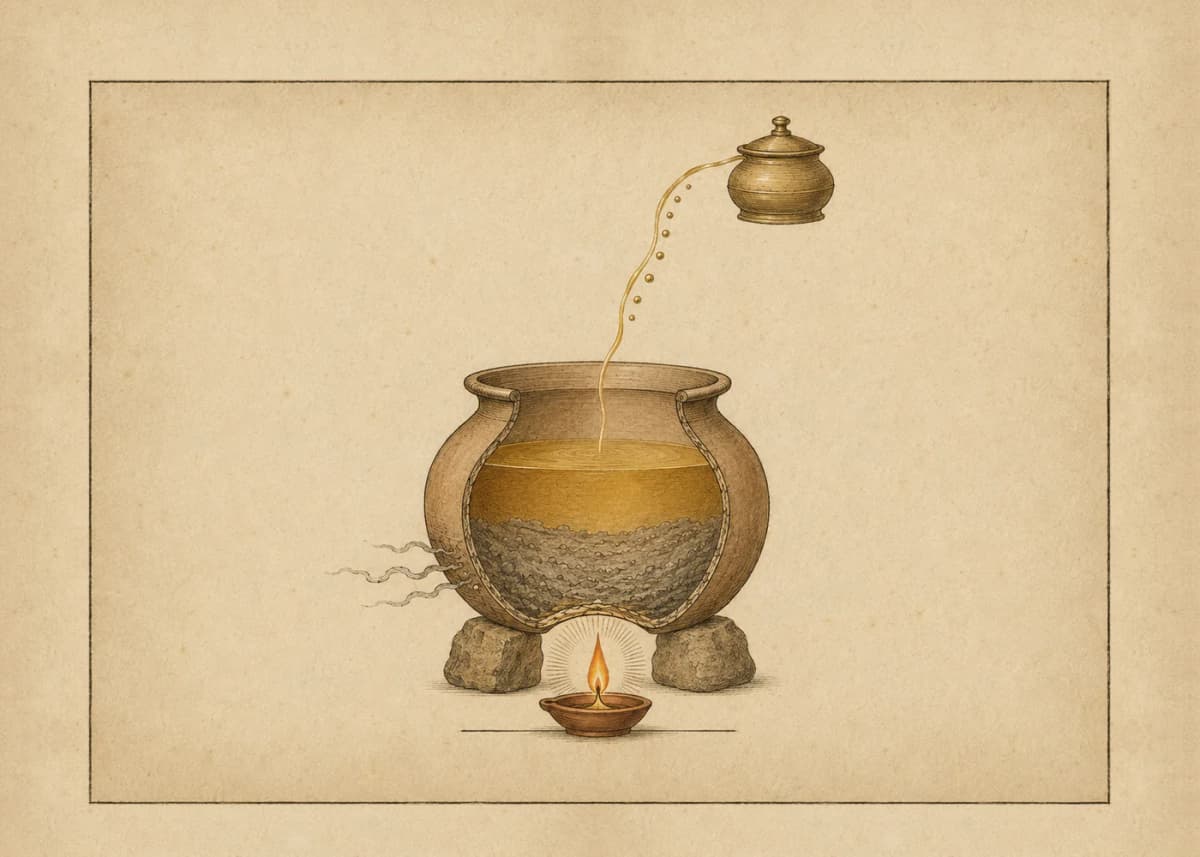
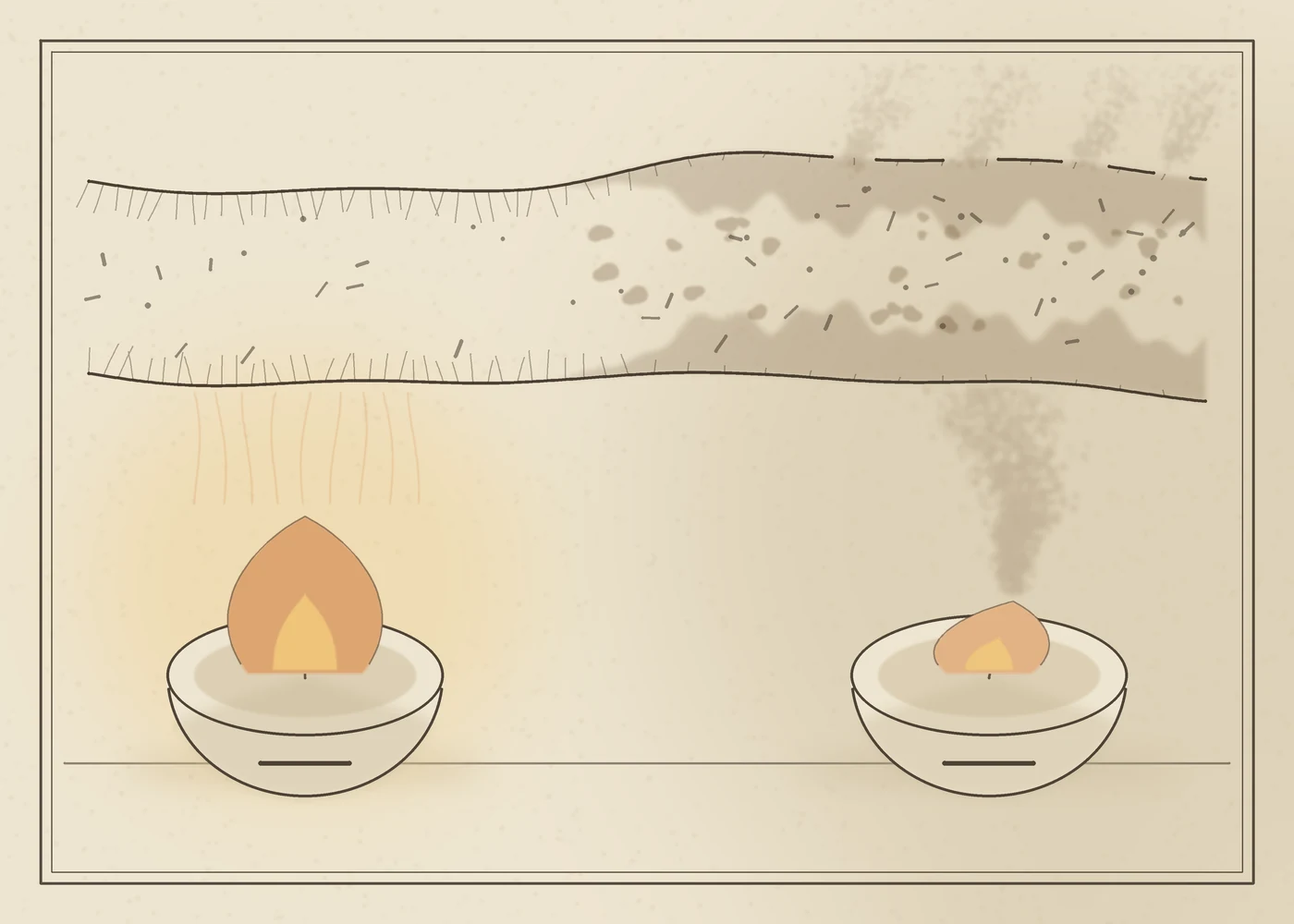
Agni — the fire. Your digestive and metabolic capacity — roughly, how well your gut breaks down what you feed it and turns it into you. Weak Agni is the root problem, not a side effect.
Ama — the residue. What's left behind when Agni can't keep up: undigested, toxic sludge that Ayurveda treats as the direct cause of downstream disease. Read today as dysbiosis and inflammatory by-products.
Dosha — the imbalance. Once Ama has clogged the system, the three regulatory principles — Vata, Pitta, Kapha — fall out of step, and that imbalance is what finally shows up as disease.
Five Autoimmune Conditions, Read Twice
Rheumatoid Arthritis
- Modern finding: A rise in Prevotella copri alongside a fall in beneficial genera like Bifidobacterium and Faecalibacterium prausnitzii, driving Th17 activation and joint inflammation.
- Ayurvedic reading: Classified as Amavata — Ama lodging in joints alongside a Vata–Kapha imbalance.
Type 1 Diabetes
- Modern finding: Reduced microbial diversity and fewer SCFA-producers, impairing regulatory T-cell function and contributing to β-cell destruction.
- Ayurvedic reading: Read as Mandagni — sluggish digestive fire — with impaired nourishment of the body's deeper tissues (Dhatus).
Multiple Sclerosis
- Modern finding: A decline in Clostridia clusters and a rise in pro-inflammatory taxa, correlating with dysregulated CNS immunity.
- Ayurvedic reading: Framed as Vata aggravation affecting Majja Dhatu, the tissue associated with nervous system integrity.
Lupus (SLE)
- Modern finding: A shifted Firmicutes-to-Bacteroidetes ratio accompanies heightened systemic immune activity.
- Ayurvedic reading: Associated with Pitta dominance and disturbance in Rakta (blood) tissue.
Inflammatory Bowel Disease
- Modern finding: Depleted Lactobacillus and Bifidobacterium populations weaken the mucosal barrier, sustaining chronic gut inflammation.
- Ayurvedic reading: Traced to Agni dushti and Srotorodha — impaired digestion directly obstructing the gut's own channels.
What Classical Texts Prescribe
None of this is presented as a cure — the research this piece draws on is explicit that rigorous trials are still scarce. But it does map out where Ayurveda has traditionally intervened in this exact sequence.
- Triphala — A three-fruit formulation reported in early studies to support Lactobacillus populations and SCFA production.
- Panchakarma — Classical detoxification protocols (Virechana, Basti) associated with improved microbial diversity in preliminary research.
- Deepana–Pachana herbs — Digestive-kindling herbs such as Shunthi (dry ginger) and Pippali (long pepper), used to rebuild Agni and clear existing Ama.
- Prakriti-based diet — Eating for one's constitutional type — an early form of what modern medicine now calls precision nutrition.
- Ritucharya & Swasthavritta — Seasonal dietary regimens plus yoga and meditation — stress reduction with a well-documented downstream effect on gut ecology.
A Quick Reflection: How's Your Agni, Today?
Not a diagnosis — a classical Ayurvedic self-check, in three questions. Notice which column you land in most often.
| Sama Agni (balanced) | Vishama Agni (irregular) | Manda Agni (slow) | |
|---|---|---|---|
| Appetite | Steady and predictable | Unpredictable — sometimes absent, sometimes ravenous | Low most days; food sits heavy |
| After eating | Light and energised | Fine at first, then bloated or gassy later | Heavy, drowsy, or foggy |
| Energy | Consistent, without big crashes | Fluctuates — good mornings, rough afternoons | Generally low, most days |
- Mostly Sama Agni: Maintenance is the advice here — keep meal timing regular, favour warm, freshly cooked food.
- Mostly Vishama Agni: The classical Vata-imbalance pattern. Ayurveda's usual first move is consistency — fixed mealtimes, warm cooked food over raw or cold.
- Mostly Manda Agni: The exact starting point this article traces through to Ama formation. Deepana-Pachana herbs (ginger, long pepper) and lighter, well-spiced meals are the traditional starting point — alongside a conversation with a qualified practitioner if this is a persistent pattern.
Where This Leaves Us
The overlap between "dysbiosis, leaky gut, Th17 activation" and "Agni Dushti, Ama, Srotorodha" is striking enough to take seriously — and honest enough that research still hasn't closed the loop. What's missing isn't the theory; it's controlled trials that measure Ayurvedic interventions against microbiome and autoimmune outcomes directly, using the same tools — metagenomics, metabolomics — that mapped the modern pathway in the first place. That's the frontier this integrative reading points toward.
This article is an educational synthesis of published research and classical Ayurvedic concepts. It is not medical advice and does not replace consultation with a qualified physician or Ayurvedic practitioner, especially for anyone managing a diagnosed autoimmune condition.
Ardyaveda Patrika — Gut–Immune Series
Educational content, not medical advice. Ayurveda is complementary to medical care, never a replacement for it. Talk to a Vaidya or your doctor before changing anything you take.
Five minutes. No card.